Yin and Yang are like the big bosses of balance - two opposite forces that work together to keep everything in harmony. Imagine two best friends who are total opposites: one loves quiet nights with books and cozy blankets, while the other bounces around with sunny energy, blasting music and playing games. But together? They make the perfect team! That's yin and yang, the super-duo from ancient China that keeps the whole universe spinning in harmony.
Yin is the chill, dark side, and yang is the bright, zippy side. Everything in life has a bit of both, and when they balance, magic happens!
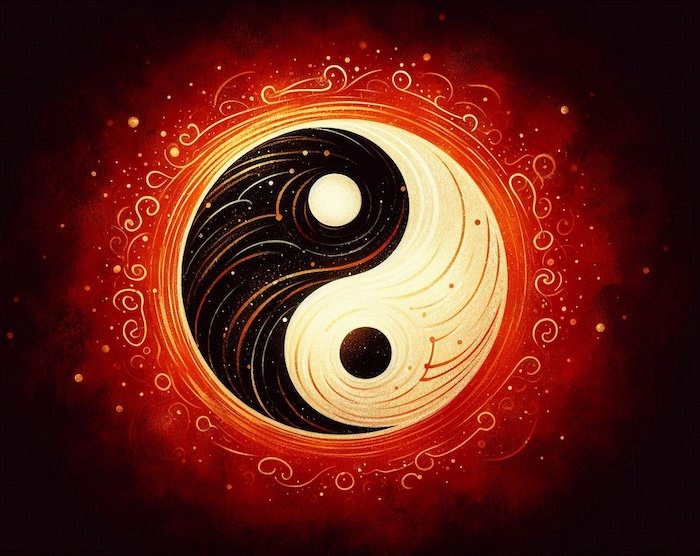
What Are Yin and Yang?
Yin and yang are like the two halves of a giant cookie - one chocolate (yin) and one vanilla (yang). They're not enemies; they're partners who need each other to make the world work. Yin is all about cool, quiet, soft stuff: think night time, the moon, water, winter, and feeling relaxed like a cat napping in the shade. Yang is the hot, loud, active half: sunny days, fire, summer, running around, and buzzing with excitement like a bee on a sugar rush!
In short:
Yin and Yang are two opposite but connected types of energy.
- Yin is calm, quiet, cool, gentle, and thoughtful
- Yang is active, bright, warm, strong, and energetic
Neither Yin nor Yang is better than the other. They need each other to exist. You can't have day without night or rest without activity.
A simple way to imagine Yin and Yang is breathing: You breathe in (Yin), and you breathe out (Yang). Both are necessary.
These elements help explain energy, personality, balance, and change in the world.
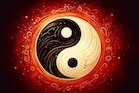
The famous black-and-white circle shows Yin and Yang swirling together. Each side contains a small dot of the other, reminding us that nothing is ever completely Yin or completely Yang. It shows that opposites attract and change into each other, like day turning into night or winter melting into spring.
Balance is more important than being only one thing.
How Yin and Yang Connect to the Five Elements
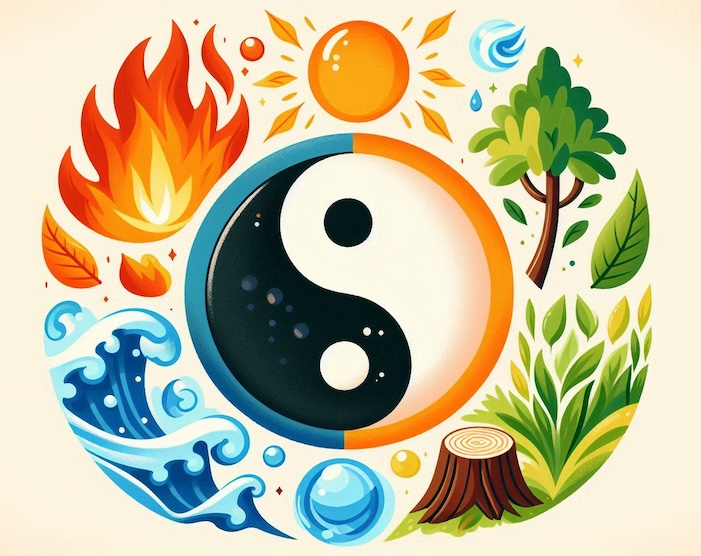
The Five Elements - Wood, Fire, Earth, Metal, and Water - are different ways Yin and Yang appear in nature.
- Fire is mostly Yang (hot, bright, energetic)
- Water is mostly Yin (cool, calm, flowing)
- Wood is growing Yang
- Metal is strong, focused Yin
- Earth balances both Yin and Yang
Together, Yin-Yang explains how energy moves, while the Five Elements explain what kind of energy it is.
Yin and Yang in the Chinese Zodiac
Zodiac animals also show Yin or Yang qualities.
- Yang animals (like Tiger, Dragon, Horse) are bold, active, and expressive
- Yin animals (like Rabbit, Snake, Pig) are gentle, thoughtful, and calm
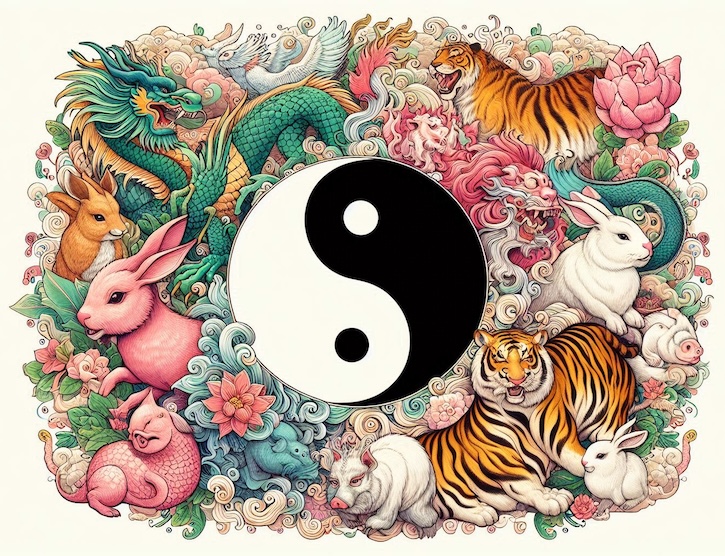
Each year combines:
- An animal
- An element
- A Yin or Yang energy
That's why zodiac years feel different from one another - even when the same animal returns!
Why Yin and Yang Are Important in Chinese Culture
Yin and Yang are not just ideas, they guide everyday life.
They appear in:
- Traditional Chinese medicine (balancing the body)
- Martial arts (softness and strength together)
- Food and cooking (warm and cooling foods)
- Art and literature (light and shadow, action and rest)
Chinese culture teaches that when Yin and Yang are balanced, people feel healthy, calm, and happy.
What Happens When Balance Is Lost?
Too much Yang can cause:
- Anger
- Restlessness
- Exhaustion
Too much Yin can cause:
- Laziness
- Sadness
- Lack of motivation
That's why balance is the goal - not being strong all the time or quiet all the time, but knowing when each is needed.
Balance Makes the World Work
Yin and Yang are the heart of many Chinese traditions and every day life. They help explain how opposites can work together instead of fighting each other.
Yin and Yang in Traditional Chinese Medicine (Balancing the Body)
In Traditional Chinese Medicine (TCM), health is about balance, not just about fighting sickness. Doctors believe the body stays healthy when Yin and Yang are working together.
Yin represents coolness, rest, and nourishment.
Yang represents warmth, movement, and energy.
Imagine a child who keeps feeling too hot and restless and has trouble sleeping. A TCM doctor might say there is too much Yang. Instead of giving strong medicine right away, the doctor may suggest more rest, cooling foods, and calm activities to increase Yin.
Another child might feel tired, cold, and slow all the time. This could be too much Yin, so warming foods and gentle exercise are recommended to bring back Yang.
The lesson: The goal is not "more" or "less," but just enough of both.
Yin and Yang in Martial Arts (Softness and Strength Together)
In martial arts like Tai Chi or Kung Fu, Yin and Yang are practiced with the body.
Yang movements are strong, fast, and powerful
Yin movements are soft, slow, and gentle
In Tai Chi, students are taught not to fight force with force. If someone pushes hard (Yang), the martial artist steps back softly (Yin), then redirects the energy.
A teacher might say: "A stiff tree breaks in the wind, but a bending tree survives."
The lesson: True strength comes from knowing when to be soft and when to be strong.
Yin and Yang in Food and Cooking (Warm and Cooling Foods)
In Chinese cooking, foods are not only tasty, they are also thought of as warming (Yang) or cooling (Yin).
Yang foods: Ginger, garlic, fried foods (warm the body)
Yin foods: Fruits, cucumbers, soups (cool and hydrate)
On a cold winter day, families often eat hot soup with ginger to warm the body (adding Yang). On a hot summer day, people enjoy fruit or cooling soups to calm the body (adding Yin). ✨
The lesson: Eating with the seasons helps keep the body comfortable and balanced.
Yin and Yang in Art and Literature (Light and Shadow, Action and Rest)
In Chinese art and storytelling, Yin and Yang help create beauty and meaning.
Yin appears as quiet moments, shadows, moonlight, rest
Yang appears as action, sunlight, bravery, excitement
In many stories, a brave hero (Yang) must first spend time thinking or training quietly (Yin). Without the quiet moments, the hero would rush in and fail.
In painting, artists often leave empty space (Yin) around mountains or rivers (Yang). The empty space makes the picture feel peaceful and balanced.
The lesson: What you don't see can be just as important as what you do see.
A Lesson for Everyday Life
Yin and Yang remind us that:
- It's okay to rest after working hard
- It's good to be quiet sometimes and brave at other times
- Differences help the world stay balanced
More on Chinese Zodiac, Astrology and Mythology














Most Popular Excursions
Book with confidence! Free cancellation: Cancel up to 24 hours in advance to receive a full refund